


CNA Exam Practice Tests | 2026
4.824.00 Reviews
App Specs
- Version
- 2.1.020
- Updated On
- License
- Free
- Downloads
- 10,000+
- Developer
- Prepia Inc
- Categories
- Education
- Platform
- Android
Screenshots
 Analysis by AppCompare
Preparing for a certified nursing assistant exam can feel strangely difficult because the material is practical, but the test itself demands quick recognition of terms, procedures, safety rules, and resident-care decisions. I used CNA Exam Practice Tests | 2026 as a focused study companion, and I found that its biggest value is simple: it gives CNA candidates a place to rehearse exam-style thinking instead of only rereading notes.
This is a free education app from Prepia Inc., aimed at learners working toward CNA certification. It combines a large question bank, an exam simulator, and study-guide material in one mobile experience. The app is rated for Everyone, so it is easy to recommend as a general study tool, although the subject matter is clearly most useful to nursing assistant students, recent graduates, and people returning to the material before testing.
My overall impression is positive, with an important qualification. This app works best as a structured practice layer alongside a class, textbook, instructor, or official testing guidance. I would not treat it as a replacement for hands-on training, because answering a question about transferring a resident is not the same as safely performing the transfer with real equipment and supervision.
How the current version fits into CNA preparation
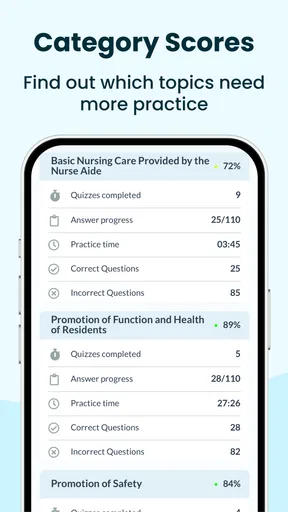
The current release is version 2.1.020, and the app was released on July 28, 2025. Those details matter because this is a relatively recent study product rather than an old question bank that has simply remained available without visible development. The most useful way to judge it, though, is not by the version label alone. What matters in daily use is whether the app helps me identify weak areas, practice under pressure, and return to difficult topics without wasting study time.
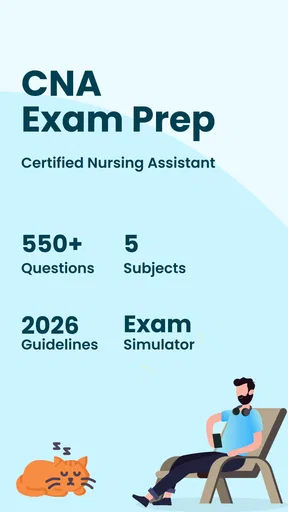
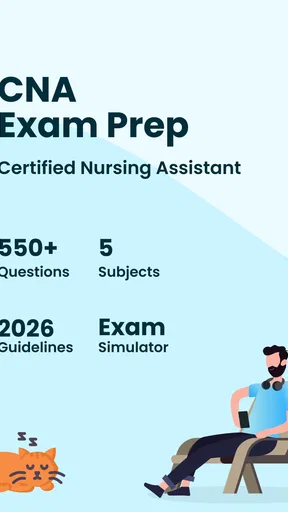
Its central offering is a collection of more than 550 CNA practice questions. That is enough material to support repeated sessions, especially if I avoid rushing through everything in one sitting. A large bank is helpful here because memorizing the wording of a small quiz can create false confidence. Seeing familiar subjects presented through different questions gives me a better sense of whether I understand the underlying principle.
The app is free to install, which makes it easy to test before committing to a particular study routine. It also includes optional in-app purchases priced from $7.99 to $59.99 per item. I would therefore start with the accessible material first and only consider paying after deciding whether the question style, explanations, and workflow suit my learning habits. The free entry point is a genuine advantage, but the presence of purchases means I would check exactly what each paid item unlocks before buying.
Its average rating is 4.8 from 387 ratings, while the app has 24 written reviews. That combination suggests a strong reception among the people who rated it, although I would still judge it by how well it matches my own state exam requirements and study needs. The app has passed 10K+ installs, so it has some real-world use without being so widespread that popularity alone proves its quality.
Worth Reading Before You Choose

Flipboard Shows What News Apps Must Do Beyond the Feed

Switching to Android Auto Means Rethinking Your Driving Routine

Google Calendar Makes a Crowded Week Easier to Manage

Ludo King Makes the Most of the Minutes Between Plans

Baby Panda World Brings Quick Play to Modern Phones, but Its Game Library Feels Busy

ESPN’s Live Game View Makes Following Close Games Easier
What I found useful in the question-bank approach
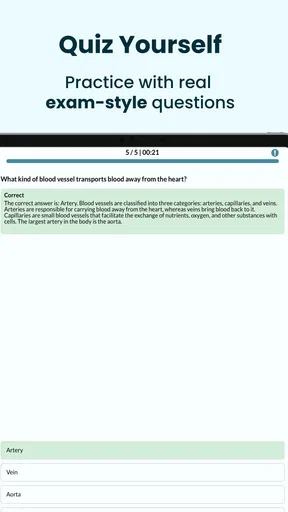
The strongest part of the experience is the shift from passive reading to active recall. When I read a CNA chapter, familiar phrases can make me feel prepared even when I cannot retrieve the answer independently. A practice question exposes that weakness immediately. I have to choose an action, distinguish between similar terms, or recognize which response protects a resident’s safety and dignity.
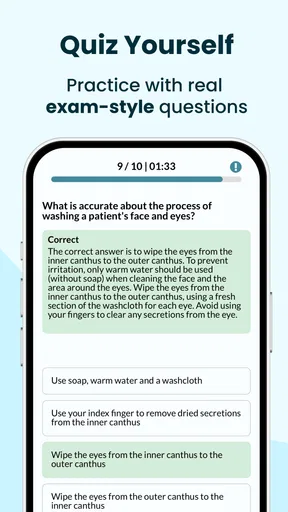
I recommend using the questions in three distinct ways rather than treating every session as a full mock exam. First, I would answer a short group slowly and explain to myself why each choice is right or wrong. Second, I would revisit missed questions later without looking at the earlier answer. Third, I would use the simulator mode when I want to test speed and concentration. This three-stage routine turns the same bank into learning material, review material, and an exam rehearsal.
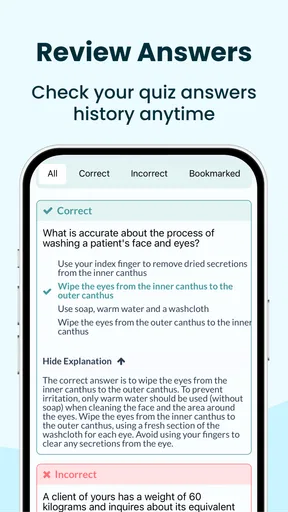
A useful but easy-to-miss insight is that wrong answers can be more valuable than correct ones. If I select an unsafe transfer technique or confuse a privacy rule with a documentation rule, I should record the reason for the mistake rather than simply note the correct letter. That creates a personal error log. After several sessions, the log tells me whether my problem is vocabulary, sequencing, infection control, communication, or rushing through wording.
Another practical tip is to read every question as if it describes a real resident, even when the wording feels abstract. CNA exams often test priorities. The best answer is not always the most detailed action; it may be the one that protects immediate safety, preserves privacy, follows the care plan, or reports a change appropriately. Practicing that mindset inside the app makes the questions more useful than guessing based on keywords.
Using the simulator without turning it into a guessing game
The exam simulator is most helpful when I use it at the end of a study cycle, not as my only method from the beginning. Early in preparation, I want time to think and review. Later, I want to see whether I can maintain accuracy when questions arrive one after another and I cannot pause to reread an entire lesson.
I would create a simple schedule around it. On a workday or class day, I might complete a smaller practice session and review every uncertain answer. On a less busy day, I would take a longer simulated exam, then spend at least as much time examining mistakes as I spent answering questions. That second part is where many learners lose the benefit. A score without analysis tells me how I performed once; a mistake review tells me what to change next time.
The simulator should not be used to chase a perfect result through repeated immediate retakes. If I see the same questions again too soon, recognition can replace understanding. A better approach is to leave a gap, study the relevant topic, and then return. I would also avoid taking a simulated test while distracted or exhausted, because the result would reflect my circumstances more than my readiness.
For someone with limited time, the app can fit into small spaces: a commute when it is safe to study, a break before class, or a quiet evening review. I would not use a phone while walking through a clinical area or during resident care. The convenience is useful, but it should never compete with attention to real people or training responsibilities.
How the study guide supports, rather than replaces, class material
The study-guide component gives the app more value than a bare quiz collection. I see it as a quick reference for refreshing concepts before answering questions. That is especially useful when I remember that I missed something but cannot immediately recall which topic needs attention.
Still, mobile summaries have a natural limitation. A concise explanation can help me remember a principle, but it may not provide the depth of a textbook, instructor demonstration, or facility-specific procedure. CNA students often need to understand not only what to do, but why the procedure is performed in a particular order and how to adapt it safely. I would use the guide to identify a subject for deeper study, then verify it against class notes and the rules that apply to my exam.
This is also where regional differences matter. CNA certification requirements and exam emphasis can vary by location. The app is useful for broad preparation, but I would compare its coverage with my state’s candidate handbook, testing outline, and instructor guidance. If an official outline emphasizes a skill that appears less often in my practice sessions, I would study that skill deliberately instead of assuming the app’s question mix represents the entire exam.
That trade-off is important for experienced aides as well. Someone who already works in care may recognize many situations from daily experience, but workplace habits do not always match the exact language expected on a certification test. The app can reveal those differences. Conversely, a learner who has never practiced a skill should not mistake a correct multiple-choice answer for clinical competence.
What changed for existing users in the current release
Because the current version is 2.1.020 and the product is still a relatively recent release, existing users have a reason to keep an eye on updates rather than assuming the first installation is the final form. The release information establishes where the app currently stands, but it does not by itself prove that every future change will improve the study experience.
For someone already using an earlier build, I would judge an update by practical questions: Does navigation feel more predictable? Is it easier to return to missed questions? Are explanations clearer? Does the simulator support a more realistic review rhythm? Those are the changes that affect study quality, even more than cosmetic adjustments.
I would also protect my own study records when updating. Before relying on an update during the final days before an exam, I would make sure I know how to find the same study areas and would avoid changing my entire routine at the last minute. An update can be welcome, but exam preparation benefits from stability. If the current workflow already helps me review mistakes efficiently, I would keep using that workflow while exploring any new areas gradually.
The app’s free installation makes this experimentation less risky financially, but optional purchases deserve careful timing. I would not buy additional material simply because I had a difficult practice session. A poor result may mean I need a different study method, not more questions. Paid content makes more sense when I have identified a specific gap and know that the purchase addresses it.
Where it still falls short
The biggest limitation is inherent to the format: multiple-choice practice cannot reproduce the physical, interpersonal, and time-sensitive parts of CNA work. Positioning a resident, maintaining privacy, communicating respectfully, observing changes, and reporting concerns all involve behavior that a phone screen can only describe. I would never use this app as evidence that I am ready to perform a skill independently.
Another limitation is the risk of shallow memorization. A large question bank can create the illusion of progress if I focus only on completion counts or familiar wording. The solution is to explain answers aloud, connect them to real care situations, and revisit questions after enough time has passed for recall to become meaningful again.
The app may also be less suitable for learners who need extensive visual demonstrations, instructor feedback, or accessibility features tailored to a particular learning need. In those cases, a classroom, video-based course, printed workbook, or tutor may be the better primary resource. I would use this app as a supplement rather than forcing it to fill a role it was not designed to fill.
There is also a cost consideration. Although the app is free to start, the range of optional purchases means the total experience can differ depending on what a learner chooses. I would compare the price of any paid item with a local review course, a used textbook, or instructor-provided resources. More content is not automatically better if it duplicates material I already have.
Who should use it and who should choose another tool
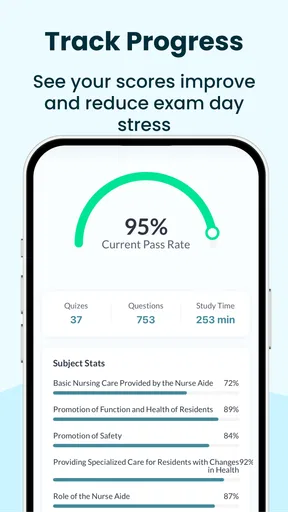
I think it is a strong fit for a CNA student who has completed lessons and wants regular retrieval practice. It is also useful for someone returning to the field after a break, a learner who needs a portable review routine, or a candidate who wants to discover which subjects repeatedly cause mistakes.
It is less suitable as the sole resource for a beginner who has not learned the basic procedures yet. That person may need explanations, demonstrations, and supervised practice before quiz questions become meaningful. It is also not the right choice for anyone seeking a complete clinical training program, personalized coaching, or a guarantee that every local exam topic will appear in the same form.
Compared with ordinary flashcards, the app offers a more active test experience and the added structure of a simulator and study guide. Compared with a full prep course, it is lighter and more flexible, but likely less personal and less hands-on. Compared with a printed workbook, it is easier to carry and revisit in short sessions, while paper may be better for annotating detailed explanations or studying away from a screen.
What I would watch before relying on it heavily
I would watch how consistently the app helps me learn from errors, not just how high my scores become. I would also pay attention to whether the study guide remains easy to navigate as the content develops and whether future releases make the simulator more useful without making the interface distracting.
For exam preparation, I would keep checking my official testing materials alongside the app. If my state outline changes or my instructor identifies a local emphasis, that information should take priority. The app can organize practice, but official requirements determine what I ultimately need to know.
I would also watch my balance between screen practice and real preparation. A good routine might include app questions, textbook review, skills lab practice, and conversations with an instructor. The app is most effective when each missed question leads to a concrete action: rehearse a procedure, review a definition, write down a reporting sequence, or ask for clarification.
After using it this way, I see CNA Exam Practice Tests | 2026 as a practical and approachable study companion rather than a complete certification solution. Its combination of 550+ questions, simulated testing, and reference material gives me enough variety to build a repeatable routine, while the free starting point makes it easy to evaluate. The strongest results will come from learners who review mistakes carefully and connect the questions to supervised clinical practice.
My recommendation is straightforward: try it if you need portable CNA exam practice, especially after you have learned the fundamentals. Use the simulator to measure readiness, use the guide to refresh concepts, and use your errors to decide what to study next. The app is most valuable when it turns uncertainty into a specific study plan; it is not a substitute for hands-on instruction, official exam guidance, or the judgment required in real resident care.
Pros
- Covers key nursing topics commonly tested on the CNA exam.
- Practice questions help identify weak areas before test day.
- Useful for quick study sessions during commutes or breaks.
- Simple interface makes it easy to start a quiz without setup.
- Updated 2026 content may better match current exam expectations.
Cons
- Some explanations may not be as detailed as a nursing textbook.
- Question difficulty can vary between practice sets.
- Requires consistent studying to provide meaningful exam preparation.
- May not reflect every state’s specific CNA testing requirements.
- Certain features or content may require an in-app purchase.
FAQs for CNA Exam Practice Tests | 2026
What is CNA Exam Practice Tests | 2026?
CNA Exam Practice Tests | 2026 is a study app designed to help aspiring Certified Nursing Assistants prepare for certification exams. It typically includes practice questions covering essential nursing assistant topics, such as patient care, safety, infection control, communication, basic nursing skills, and personal care. The app is intended to complement, not replace, official training and classroom instruction.
Does the app cover both the written and skills portions of the CNA exam?
The app primarily focuses on written-test preparation through multiple-choice questions, explanations, and simulated practice sessions. Depending on the available version and content updates, it may also provide guidance related to common clinical skills tested in CNA programs. However, users should verify their state’s official skills checklist because practical requirements, terminology, and testing procedures can vary significantly by location.
Is CNA Exam Practice Tests | 2026 suitable for beginners?
Yes, the app can be useful for beginners as well as students who are reviewing before their examination. New learners can use the question categories to become familiar with CNA terminology and identify areas that require more study. Still, beginners should use it alongside an accredited CNA course, instructor demonstrations, textbooks, and supervised hands-on practice rather than relying on the app as their only source of preparation.
Can I use the app without an internet connection?
Offline availability may depend on how the app stores its questions, explanations, progress data, and advertisements. Some sections may remain accessible after installation, while features such as updates, synchronization, premium content, or advertisements may require an internet connection. Before studying without Wi-Fi or mobile data, open the main practice areas and confirm that the tests you need are available offline.
Is this app enough to pass the CNA certification exam?
No study app can guarantee a passing result. CNA Exam Practice Tests | 2026 can provide valuable repetition, help reveal weak subjects, and improve confidence with exam-style questions, but success also requires formal education, practical training, and familiarity with your state’s testing rules. For the best preparation, combine the app with official candidate materials, instructor feedback, skills practice, and timed mock examinations.


